
Table of Contents
- What Locksmith Damage Liability Actually Covers
- Locksmith Insurance Requirements: What Every Pro Should Carry
- How to File a Claim Against a Locksmith: A Step-by-Step Process
- Preventing Property Damage During Lockouts: What Customers and Techs Can Do
- Does Homeowners Insurance Cover Locksmith Damage?
- Liability Waivers, Service Agreements, and What They Really Mean
- Frequently Asked Questions
Last Updated: September 13, 2026
What Locksmith Damage Liability Actually Covers
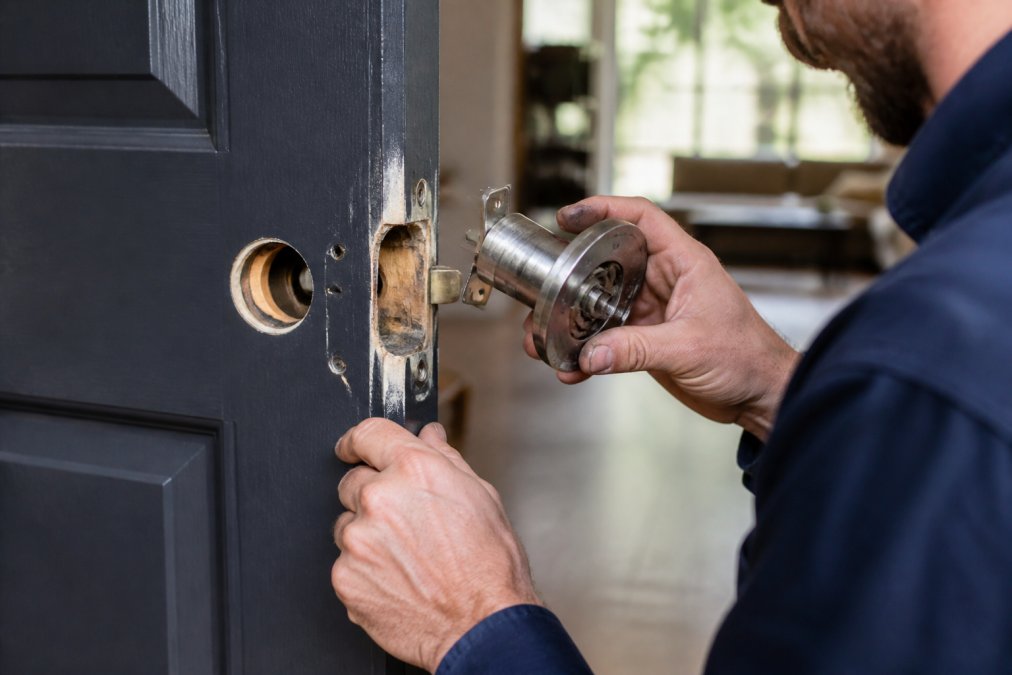
Locksmith damage liability is the legal and financial responsibility a locksmith bears when their work damages a customer’s property. This guide breaks down who pays when a lock, door, or frame gets damaged during a service call. Most disputes come down to one question: was the damage an honest accident or careless workmanship?
Liability generally covers three things: the lock hardware, the surrounding door and frame, and any personal property damaged in the process. A technician who scratches a deadbolt while re-keying it is in a very different situation than one who cracks a door panel with a pry bar.
Accidental Damage vs. Negligent Workmanship
The line between accidental damage and negligence is where most claims are won or lost. Accidental damage is unintended harm despite reasonable care, such as a drill bit slipping on an older, brittle lock cylinder. Negligent workmanship is harm caused by failing to meet a reasonable standard of care, such as using the wrong tool.
A common mistake is assuming any damage equals liability. A technician who follows proper procedure and still damages a 40-year-old lock is usually not held responsible, because the hardware failed on its own. One who skips basic steps, like checking for a secondary lock before prying, is far more likely to be found negligent.
Locksmith Insurance Requirements: What Every Pro Should Carry
Locksmith insurance requirements vary by state, but most reputable operations carry a core set of policies regardless of what the law mandates. A general liability insurance policy is the foundation, covering third-party claims for property damage and bodily injury during a job. Without it, a single damaged door could come straight out of the technician’s pocket.
General Liability, E&O, and Commercial Auto
Three policy types do most of the work in this industry:
- General liability insurance: Covers property damage and bodily injury to third parties, such as a customer’s door or a passerby injured on the job site.
- Errors and omissions (E&O): Covers professional negligence claims, like a botched master key system that leaves a building insecure.
- Commercial auto: Covers vehicles used for service calls, including the mobile key-cutting setups many technicians run.
A business owner policy often bundles general liability with property coverage, which is a practical option for a small shop. The U.S. Small Business Administration guidance on business insurance explains how these policies fit together for service businesses.
What Drives the Cost of a Locksmith Policy
Premiums are not one-size-fits-all. Main cost factors:
- Annual revenue: Higher revenue means higher exposure, so insurers scale premiums accordingly.
- Number of employees and subcontractors: Each additional tech adds payroll and risk to the policy.
- Service mix: Mobile-only lockout work prices differently than commercial master key installation or safe servicing.
- Claims history: A prior property damage or E&O claim will follow the business for years.
- Coverage limits: A $1 million per-occurrence general liability limit costs more than a $500,000 limit, but many commercial clients require the higher number contractually.
- State and territory: Rates vary by region based on litigation climate and repair costs.
Most small locksmith operations pay a few thousand dollars a year for a bundled general liability and E&O policy, while larger commercial-focused shops pay more. Compare quotes line by line, not on the total alone.
Common Exclusions to Read Before Signing
Every liability policy has exclusions, and the ones that bite locksmiths most often are:
- Intentional acts: Damage a technician causes on purpose is never covered.
- Faulty workmanship: The cost of redoing the locksmith’s own defective work is typically excluded, even when the resulting property damage is covered.
- Wear and tear: Pre-existing deterioration of a lock or frame is not a covered loss.
- Vehicle use off the job: Personal errands in a company van may fall outside commercial auto coverage.
- Cyber and data: Customer key codes and access records stored digitally usually need a separate cyber endorsement.
Endorsements Worth Adding
- Lost key coverage: Responds when a customer’s keys are lost or stolen and re-keying is required.
- Tools and equipment floater: Covers the pick sets, key machines, and diagnostic gear that travel between jobs.
- Care, custody, and control: Fills the gap when a customer’s lock or safe is in the technician’s possession and is damaged.
Ask any locksmith for a certificate of insurance before they start work. A legitimate operation will provide it without hesitation. If a technician can’t produce one, that’s your signal to call someone else, because you may have no recourse if your property is damaged.
Legal Defense Costs and Settlements
A liability policy does more than pay for a damaged door. It also funds legal defense costs if a customer sues, which can dwarf the repair bill. Defense costs are usually paid outside the policy limit on general liability policies, leaving the full limit available for a settlement or judgment. On some E&O policies, defense costs are paid inside the limit, eroding the amount available to settle. Reading that distinction before a claim happens is one of the most practical things a locksmith can do.
How to File a Claim Against a Locksmith: A Step-by-Step Process
Filing a claim against a locksmith follows a predictable path, and documenting each step is what makes it succeed:
- Document the damage immediately. Photograph the damaged property from multiple angles before anything is moved or repaired.
- Notify the locksmith in writing. Send a dated message describing the damage and requesting a response. Keep a copy.
- Request the certificate of insurance. Ask for the insurer’s name and policy number so you can file directly if needed.
- Get a repair estimate. A written estimate from a third party establishes the dollar value of your claim.
- File with the locksmith’s insurer. If the business won’t resolve it directly, file a third-party claim against their liability policy.
- Escalate if necessary. Small claims court handles most residential disputes, and consumer protection agencies can step in for unresolved cases.
The FTC consumer complaint process is a useful resource if a business refuses to engage. For larger commercial losses, the Better Business Bureau dispute resolution guidance offers a mediation path before legal action.
| Step | Action | Who Handles It | Typical Timing |
|---|---|---|---|
| 1 | Photograph damage | Customer | Same day |
| 2 | Written notice | Customer | Within 24-48 hours |
| 3 | Request insurance info | Customer | Within 1 week |
| 4 | Get repair estimate | Third-party contractor | Within 1 week |
| 5 | File third-party claim | Insurer | Within policy window |
| 6 | Escalate if unresolved | Court or agency | After 30 days |
Preventing Property Damage During Lockouts: What Customers and Techs Can Do
Preventing property damage during lockouts comes down to preparation on both sides of the door. Most damage happens because of rushed decisions, not bad intentions. A homeowner who calls the first number they find and a technician who arrives without the right tools are a recipe for a cracked frame.
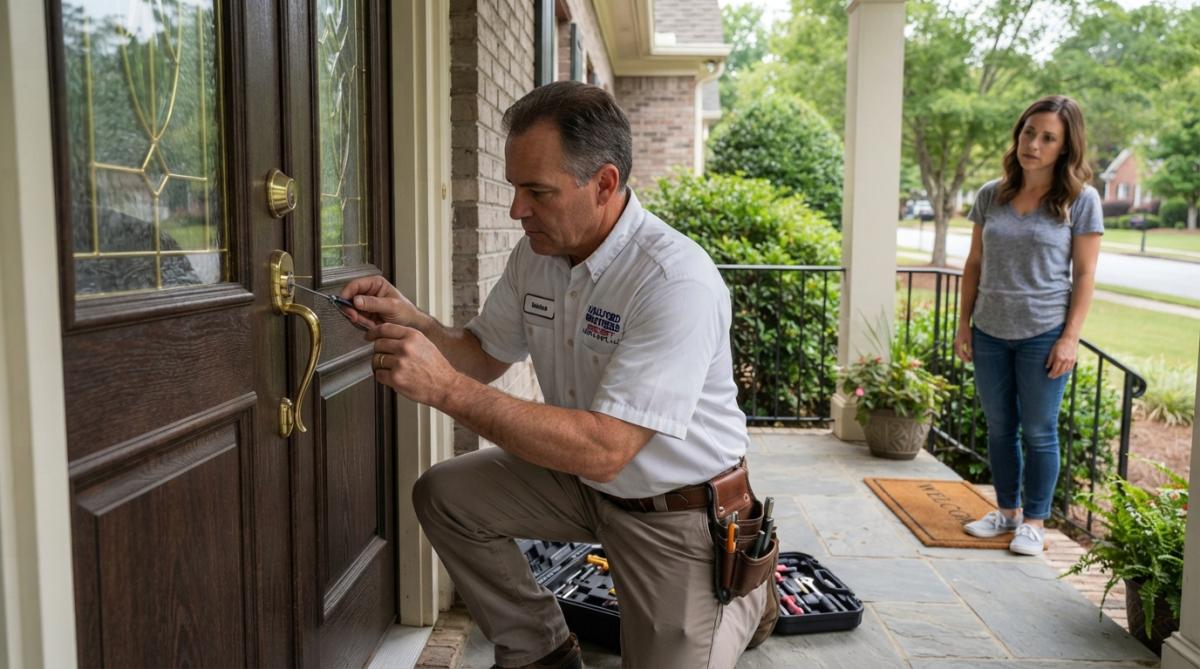
For customers, verify credentials before anyone touches the lock: confirm a physical address, ask about insurance, and get a price before work begins. For technicians, risk mitigation starts with a proper assessment: identify the lock type, check for secondary locks, and choose non-destructive entry whenever possible. Re-keying rather than drilling preserves the hardware and avoids the most common damage claims.
The most expensive mistake during a lockout is letting an unverified technician drill the lock immediately. Drilling destroys the cylinder and often the surrounding hardware, turning a simple entry into a full lock replacement. Always ask for a non-destructive attempt first.
Does Homeowners Insurance Cover Locksmith Damage?
Homeowners insurance sometimes covers locksmith damage, but it depends on who caused it. If a locksmith damages your door while working, the claim generally goes against the locksmith’s liability policy first, not your own. Your household contents insurance and dwelling coverage typically respond to theft or vandalism, not damage caused by a contractor you hired.
If a burglar damages your door during a break-in, your homeowners policy usually covers the repair. If your own locksmith cracks the frame during a legitimate service call, that’s a third-party claim against the technician’s insurance. That distinction trips up a lot of homeowners.
When Your Own Policy Might Respond
There are narrow situations where your homeowners policy can step in for locksmith-related damage:
- Vandalism after a break-in: If the door was damaged by the intruder, not the locksmith, dwelling coverage typically applies.
- Damage during a covered loss: If a fire or storm forces an emergency lockout and the technician damages the frame during entry, the loss may fold into the larger claim.
- Uninsured contractor: If the locksmith has no liability coverage and refuses to pay, some homeowners policies will cover the damage and then pursue the locksmith through subrogation, the insurer’s right to recover from the at-fault party.
The Subrogation Angle Most Homeowners Miss
When your insurer pays a claim caused by someone else, it steps into your shoes and sues the responsible party to recover what it paid. Filing with your own insurer can therefore trigger a recovery action against the locksmith. For the homeowner, this is often the fastest path to a repair, but a claim on your record, even one that gets subrogated, can affect future premiums.
Your Deductible and the Math of a Small Claim
Your deductible also matters. Filing a small claim against your own policy can raise your premium more than the repair is worth, so for minor damage it often makes more sense to pursue the locksmith directly. A homeowner weighing a $500 deductible against a $400 repair estimate realizes the insurance route costs more than it recovers. In that scenario, a written demand to the locksmith, backed by photos and a repair estimate, is usually the better first move.
Consumer-Side Claims Process: What Most Guides Skip
Nearly every article on this topic is written for locksmiths buying insurance. Very few explain what a homeowner should do when a locksmith damages their property. The short version:
- Photograph everything before the technician leaves the property.
- Get the business name, license number, and certificate of insurance in writing.
- Send a dated written demand describing the damage and the amount you’re seeking.
- File a third-party claim with the locksmith’s general liability insurer if the business won’t resolve it directly.
- Notify your own insurer only if the locksmith is uninsured or the damage is large enough to justify a claim on your record.
- Escalate to small claims court for disputes under your state’s monetary limit, which is commonly a few thousand dollars for residential property damage.
Do not let the locksmith repair the damage themselves before you have documented it. Once the evidence is gone, proving the extent of the loss becomes far harder, and the locksmith’s insurer may dispute the claim.
What Homeowners Insurance Will Not Cover
- Faulty workmanship by the locksmith: Your policy is not a warranty on someone else’s labor.
- Damage the locksmith caused through negligence: That is a third-party liability claim, not a first-party one.
- Pre-existing wear: A frame that was already rotting before the service call is not a covered loss.
- Cosmetic scratches: Most policies have a threshold below which a claim is not worth filing.
The practical takeaway: your homeowners policy is a backstop, not the primary route. The locksmith’s liability coverage is the first place to look, and knowing that distinction separates a resolved claim from a stalled one.
Liability Waivers, Service Agreements, and What They Really Mean
Liability waivers and service agreements set the rules before any work begins, and most customers sign them without reading. A service agreement outlines the scope of work, the price, and the limits of the technician’s responsibility. A damage waiver may shift certain risks back to the customer, but it cannot waive liability for negligence in most cases.
This is the part most guides get wrong. A waiver does not give a locksmith a free pass to damage your property carelessly. Courts generally refuse to enforce waivers that shield a business from its own professional negligence. What a waiver can do is clarify that the customer accepts the risk of pre-existing weaknesses, like a door frame that was already rotting.
For property managers handling multiple units, a clear service agreement with defined policy limits and indemnity terms prevents disputes before they start. Hallford Brothers Security Lock & Safe, LLC works with property managers in Marietta and Smyrna to set up master key systems and service agreements that spell out exactly who is responsible for what.
Locksmith damage liability comes down to preparation, documentation, and choosing a technician who stands behind their work. Hallford Brothers Security Lock & Safe, LLC brings over 56 years of experience to every job, with upfront pricing, a storefront you can visit, and a team that treats your property like their own. Whether you need an emergency lockout resolved or a master key system designed for multiple properties, you can get a quote and talk through your options with an experienced specialist. Get started with Hallford Brothers Security Lock & Safe, LLC and protect your property with confidence.
Frequently Asked Questions
Are locksmiths responsible for damage caused during a lockout?
In most cases, yes. If a locksmith scratches a door, breaks a cylinder, or damages a frame while working, that falls under locksmith damage liability and the company’s general liability insurance typically covers the repair. The exception is damage the customer authorized in writing, such as drilling a lock when no other entry method works. Always ask for a written service agreement before work starts and photograph any pre-existing damage.
How do I prove a locksmith caused damage to my property?
Document everything before and after the visit. Take timestamped photos of the door, frame, and lock before the tech starts, keep the invoice and any signed work authorization, and note the technician’s name and license number. If damage appears after the job, get a written repair estimate from a separate contractor. Most insurers and small claims courts accept this combination of photos, receipts, and a third-party estimate as proof.
What should I look for in a professional locksmith’s insurance policy?
Ask for a certificate of insurance showing general liability coverage, and confirm the policy is active by calling the listed insurer. A serious locksmith business should also carry errors and omissions coverage for faulty workmanship, plus commercial auto for mobile service. If a company cannot produce a COI on request or hesitates, treat that as a red flag and hire someone who can.
Does homeowners insurance cover damage caused by a locksmith?
It depends on the cause. If a locksmith damaged your door while you hired them, your homeowners policy may cover the repair under the liability portion, and your insurer can pursue the locksmith’s insurance for reimbursement. Damage that happened during a burglary, rather than a service call, is usually handled under your dwelling or personal property coverage. Report the incident promptly and keep all documentation.